

Azelaic acid helps with acne, clogged pores, redness, uneven tone, and post-breakout dark spots. It is popular because it can gently support clearer-looking skin while also helping calm visible irritation and improve the look of discolouration. This blog explains what azelaic acid does, who should use it, how to add it to a routine, and how a hypochlorous acid spray can fit in as a calming support step.
Table of Contents
- What Is Azelaic Acid?
- What Does Azelaic Acid Do for Skin?
- Azelaic Acid for Acne and Clogged Pores
- Azelaic Acid for Redness-Prone Skin
- Azelaic Acid for Dark Spots and Uneven Tone
- Where Hypochlorous Acid Spray Fits
- Is Azelaic Acid Good for Sensitive Skin?
- How to Use Azelaic Acid in a Skincare Routine
- What Not to Mix With Azelaic Acid
- Who Should Use Azelaic Acid?
- FAQ
- Disclaimer
- References

What Is Azelaic Acid?
Azelaic acid is one of the components that help treat acne and hyperpigmentation, redness, and post-acne spots. Azelaic acid occurs naturally in such products as wheat, barley, and rye; however, azelaic acid included in skincare products is usually produced in laboratories.
In comparison with other acids used to remove dead cells from the skin, azelaic acid is often considered to be more effective since it can provide additional benefits for the skin. However, unlike other exfoliating acids, this substance does not make the skin feel smoother right after application.
According to DermNet, azelaic acid has both anti-inflammatory and antioxidant properties and is used to treat acne vulgaris, papulopustular rosacea, and hyperpigmentation. This is the reason why this acid is often suggested for people experiencing problems with pimples and hyperpigmentation.
What Does Azelaic Acid Do for Skin?
Azelaic acid has multiple actions. This active agent may help manage pores to remain clear, minimize the appearance of inflammatory blemishes, reduce visibility of redness, and enhance dark spots caused by acne.
If your skincare problem is associated with acne and clogged pores, azelaic acid will help you manage them. If you suffer from redness, azelaic acid can reduce the appearance of bumps. In case of hyperpigmentation, azelaic acid will help you reduce discolorations caused by breakouts.
Thus, azelaic acid can be considered a perfect solution for those who wish to find an active agent to solve multiple problems related to the condition of skin. There is no need to use different skincare solutions to address such issues as acne, redness, and dark spots.
Azelaic Acid for Acne and Clogged Pores
Azelaic acid may benefit those with acne as it will help unclog pores and reduce inflammation. This active is commonly used for treating mild to moderate cases of breakouts, particularly when the condition includes redness, bumps or dark spots left by healed pimples.
According to the American Academy of Dermatology, azelaic acid helps clear pores, affect acne-causing bacteria, reduces inflammation and lightens discoloration caused by acne.
Azelaic acid is different from salicylic acid. The former is typically used for oily pores, blackheads and exfoliation within the pore while the latter works on acne, redness and tone. Both actives are commonly used together, but those with sensitive skin should choose one active at first.
Azelaic Acid for Redness-Prone Skin
Azelaic acid is also popular for redness-prone skin because it can help calm the look of irritation and acne-like bumps. This makes it especially useful for people whose skin gets red easily or reacts badly to stronger acne treatments.
Many acne products can be drying or irritating if used too often. Benzoyl peroxide, strong exfoliating acids, and aggressive scrubs may work for some people, but they can feel harsh for others. Azelaic acid may be a better fit if your skin needs something that feels more balanced.
That said, persistent redness, flushing, burning, or visible blood vessels may be signs of a skin condition like rosacea. In those cases, it is best to speak with a dermatologist instead of relying only on over-the-counter skincare.
Azelaic Acid for Dark Spots and Uneven Tone
Azelaic acid is commonly prescribed for post-acne discoloration because it has an ability to improve the appearance of discolorations. These marks are also known as post-inflammatory hyperpigmentation, or PIH. They usually form after breakouts, in deeper skin types, and in skin which is easily tanned.
Acne dark spots differ from acne scars by their texture. Acne scars have changed texture – pitted or raised spots. The main issue of hyperpigmentation is its discoloration. Azelaic acid can improve the appearance of discolored skin, but it won't fill indented scars.
Using azelaic acid for dark spots, it is vital to use sunscreen because UV exposure may deepen discolorations and increase the time of healing. Otherwise, brighteners become useless without sunscreen.
Where Hypochlorous Acid Spray Fits
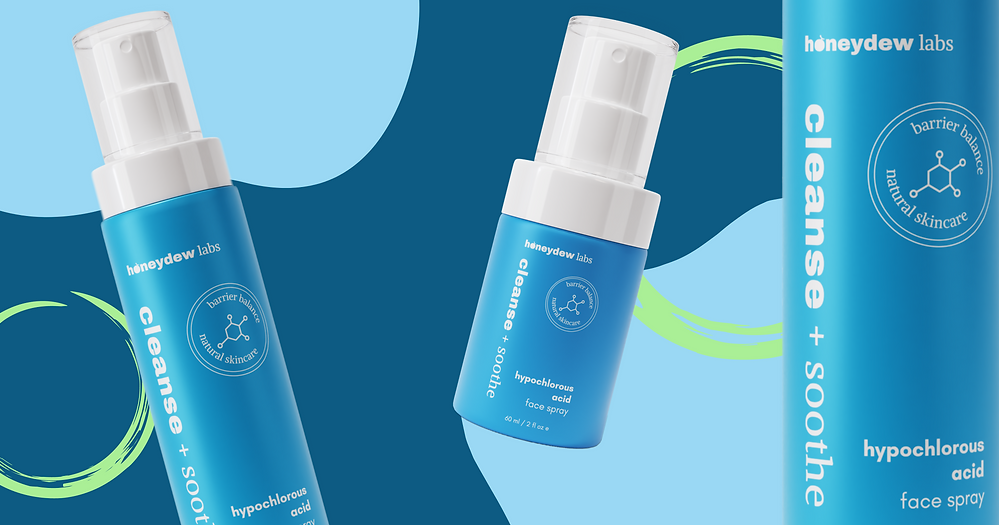
An application of a hypochlorous acid spray can be incorporated into an azelaic acid skincare routine as a soothing support step. It neither replaces azelaic acid nor is it the same in treating hyperpigmentation and clogged pores. Instead, it may aid in soothing skin that appears to be irritated, sweaty, reactive, or stressed while applying active ingredients.
One review in the Journal of Clinical and Aesthetic Dermatology considers hypochlorous acid as a topical ingredient which has been studied for its antimicrobial and anti-inflammatory activity in dermatological applications.
If incorporating hypochlorous acid spray into an azelaic acid skincare routine, use it after cleansing and before azelaic acid. Let the spray completely absorb, and then proceed to apply azelaic acid, moisturizer, and sunscreen, if it is morning time. It will come in handy especially when the skin feels stressed due to sweating, makeup, shaving, masks, and active skincare.
Consider the hypochlorous acid spray as a "keep skin calm" step in a skincare routine, while azelaic acid is the treatment step for acne, redness, and hyperpigmentation. To read more about using hypochlorous acid spray after skincare, click here.
Is Azelaic Acid Good for Sensitive Skin?
Even though azelaic acid is a good choice for sensitive skin, it might irritate the skin as well. There could be some mild irritation in the form of stinging, tingling, dryness, or itching after using azelaic acid, which doesn't necessarily mean that this product is not right for your skin. Strong burning or prolonged irritation means that something needs to be done about it.
If your skin is sensitive, begin by applying azelaic acid two or three times a week. Use a cleanser, a hypochlorous acid spray in case of irritation, moisturizer, and sunscreen. Do not try too many products at once if your skin is sensitive.
Also, you could use the "moisturizer sandwich" technique: apply moisturizer, azelaic acid, then more moisturizer on top.
How to Use Azelaic Acid in a Skincare Routine
Use azelaic acid after cleansing and before moisturizer. If you are also using hypochlorous acid spray, mist it on clean skin first and let it dry completely. Then apply azelaic acid in a thin layer.
In the morning, a simple routine could be: cleanser, hypochlorous acid spray, azelaic acid, moisturizer, and sunscreen. At night, you could use cleanser, hypochlorous acid spray, azelaic acid, and moisturizer.
If you use prescription azelaic acid, follow your provider’s directions. If you use an over-the-counter azelaic acid product, start slowly and increase only if your skin feels comfortable.
What Not to Mix With Azelaic Acid
Even though azelaic acid can be incorporated into several routines, it remains an active ingredient. It should be used carefully along with retinoids, exfoliating acids, benzoyl peroxide, or vitamin C, if your skin is sensitive.
It doesn’t mean that you have to eliminate all the actives from your skincare forever. You can try separating them throughout the day or using them on alternate days. Azelaic acid can be used during the daytime, while retinol will be applied during the night or azelaic acid on the nights without exfoliation.
If your skin becomes tight, flaky, itchy, hot, or irritated, you can simplify your skincare routine to a soothing one, including cleansing, hypochlorous acid spray, moisturizing, and sun protection.
Who Should Use Azelaic Acid?
If you struggle with acneic skin, redness, uneven tone, post-acne hyperpigmentation, congested pores, or if your skin can't handle stronger products, you might try azelaic acid.
Azelaic acid is one product that can address many skin issues at the same time. If you struggle with breakouts as well as dark spots or redness and bumps, then azelaic acid could work well for you.
Of course, there are other products that might suit you better. Blackheads might require a different kind of product like salicylic acid. Deeper acne would require prescription-strength medication. Melasma requires professional help.
FAQ
What does azelaic acid do for skin?
Azelaic acid helps with acne, clogged pores, redness, uneven tone, and post-breakout dark spots. It is known for anti-inflammatory, antioxidant, and gentle exfoliating properties.
Can I use hypochlorous acid spray with azelaic acid?
Yes. You can use hypochlorous acid spray after cleansing and before azelaic acid. Let it dry fully before applying the next product.
Is azelaic acid good for acne?
Yes. Azelaic acid can help fight acne, reduce visible inflammation, and fade the look of dark marks left after breakouts.
Can azelaic acid help with dark spots?
Yes. Azelaic acid can help improve the appearance of post-breakout dark spots and uneven tone, especially when used consistently with sunscreen.
Can sensitive skin use azelaic acid?
Many sensitive skin types can use azelaic acid, but it can still cause stinging, dryness, or irritation. Start slowly and patch test first.
Can I use azelaic acid every day?
Some people can use it daily, but beginners should start a few times per week. Increase slowly based on how your skin responds.
Disclaimer
This blog is for educational purposes only and is not medical advice. Azelaic acid and hypochlorous acid spray can support the appearance of clearer, calmer, and more comfortable-looking skin, but they do not treat every skin condition. If you have severe acne, rosacea, melasma, irritation, burning, swelling, or sudden skin changes, speak with a dermatologist or healthcare professional.
References
- American Academy of Dermatology Association. (2024). Acne: Diagnosis and treatment. https://www.aad.org/public/diseases/acne/derm-treat/treat
- Del Rosso, J. Q., & Bhatia, N. (2018). Status report on topical hypochlorous acid: Clinical relevance of specific formulations, potential modes of action, and study outcomes. Journal of Clinical and Aesthetic Dermatology, 11(11), 36–39. https://pmc.ncbi.nlm.nih.gov/articles/PMC6303114/
- DermNet. (2022). Azelaic acid. https://dermnetnz.org/topics/azelaic-acid
If you’re looking for a calming support step to pair with active ingredients like azelaic acid, you can learn more about our hypochlorous acid spray here. It’s also available through select retailers, including Amazon.

Written by
Honeydew Labs Team


