

A morning skincare routine should protect your skin for the day, keep it hydrated, and help it feel calm before makeup, sunscreen, sweat, pollution, and daily stress. This blog explains a simple morning routine order and how to adjust your routine for oily, dry, sensitive, or tired-looking skin.
Table of Contents
- Why Morning Skincare Matters
- Step 1: Cleanse Gently
- Step 2: Use Hypochlorous Acid Spray
- Step 3: Apply a Serum
- Step 4: Moisturize
- Step 5: Use Wrinkle Patches If Needed
- Step 6: Finish With Sunscreen
- How to Adjust for Your Skin Type
- Common Morning Routine Mistakes
- FAQ
- Disclaimer
- References

Why Morning Skincare Matters
Your morning skincare routine does not need to be complicated. In fact, a simple routine is usually better than layering too many products. The goal is to refresh your skin, support your barrier, and protect against the day ahead.
A good morning routine usually includes cleansing, hydration, sunscreen, and optional targeted steps depending on your skin concerns. If your skin is oily or acne-prone, you may want lightweight products that do not clog pores. If your skin is dry, you may need more barrier support. If your skin gets irritated easily, calming steps matter more than strong active ingredients.
The basic rule is to apply products from lightest to heaviest, then finish with sunscreen. The American Academy of Dermatology recommends starting with a gentle cleanser, patting skin dry, applying treatment products, then using moisturizer and/or sunscreen.
Step 1: Cleanse Gently
Begin your day with a cleansing step. If your skin feels oily, cleanse the oils, sweat, and products left on by the skin-care regime from overnight. If the skin feels dry or sensitive, then water rinse or very mild cleansing products would suit better.
Do not use hot water for the cleansing since it might leave skin feeling dry and tight. Usually, lukewarm water is recommended. The skin must be left feeling refreshed and not squeaky. This feeling mostly occurs due to the harsh cleanser.
If there is morning exercise in your schedule, cleanse afterwards. It is due to the possibility of mix-up of sweat and oils, as well as sunscreen and bacteria left on skin.
Step 2: Use Hypochlorous Acid Spray
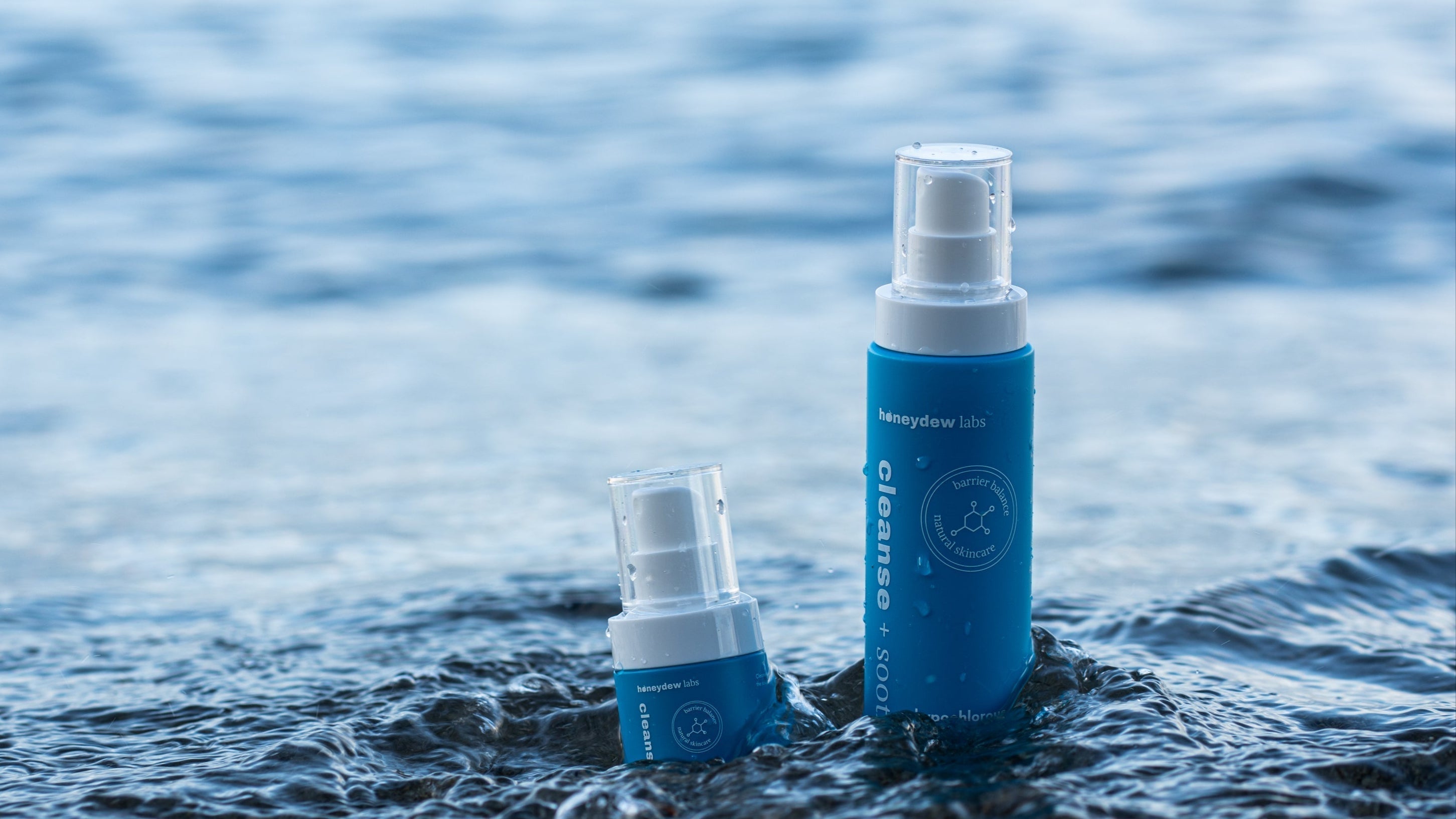
Hypochlorous Acid spray can serve well as part of a morning skincare regimen if your skin tends to be irritated, sweaty, oily, or pimply. Hypochlorous Acid is also referred to as HOCl. An article in the Journal of Clinical and Aesthetic Dermatology reviews topical hypochlorous acid and its application in skin-related environments linked to irritation, wound care, pruritus, and inflammatory skin conditions.
In your morning skincare regimen, you can apply the Hypochlorous acid spray as a relaxing refreshing spray to your skin. You can apply it after cleansing and before applying heavier skin products. Just spray it on your skin, allow it to dry, and proceed with applying serum, moisturizer, and sunscreen.
This may be particularly useful after exercising, before applying makeup, during hot days, after shaving, or whenever your skin appears irritable. This product is not meant to replace the cleanser, moisturizer, treatment for acne, or sunscreen.
Learn more about hypochlorous acid spray here.
Step 3: Apply a Serum
Apply a lightweight serum that supports hydration, elasticity, and the skin barrier. In the morning, the best serum is one that absorbs quickly and layers well under moisturizer, sunscreen, and makeup without feeling heavy.
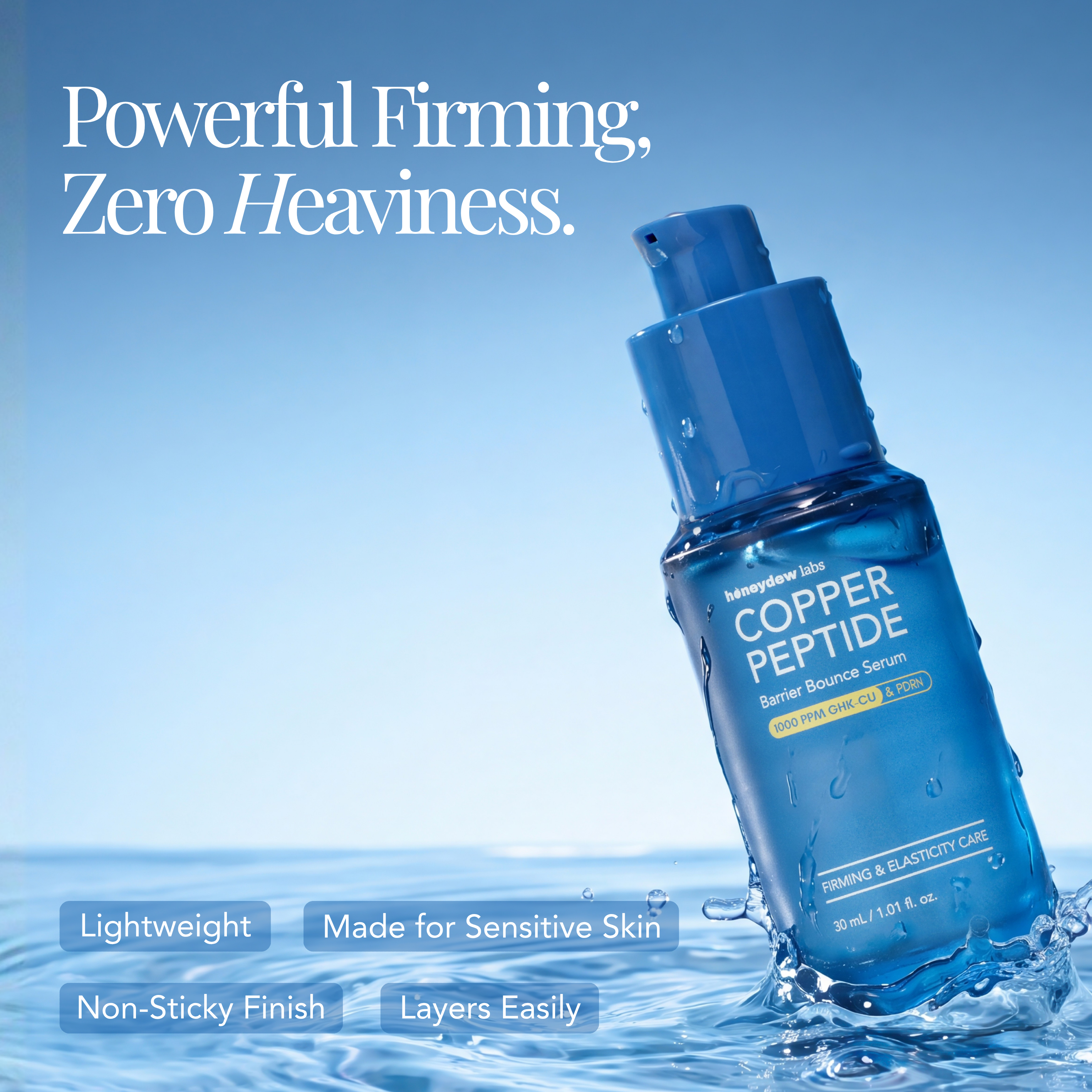
Honeydew Labs’ Barrier Bounce Copper Peptide Serum is designed for this step. It features 1% GHK-Cu copper peptide, equal to 1000 PPM, with PDRN in a lightweight, fast-absorbing formula made to visibly support skin elasticity, barrier health, and lasting hydration.
The formula also includes ectoin, panthenol, beta-glucan, multi-weight hyaluronic acid, and Centella Asiatica. Together, these ingredients help replenish moisture, comfort the skin, and support a healthier-looking barrier. This makes it a good morning option if your skin looks tired, feels dehydrated, or needs a little extra bounce before further steps.
Step 4: Moisturize
The use of moisturizer maintains the comfort and hydration of the skin barrier. Oil-based skin also needs the use of moisturizer, as long as the moisturizer being used is light and noncomedogenic.
In the case that you have oily skin, it is best to use either gel or gel-cream moisturizer. For dry skin, a moisturizer that is creamy and has barrier-supporting substances such as ceramides, glycerin, and panthenol will do. Sensitive skin requires minimal fragrance in a moisturizer.
The use of moisturizer also makes sunscreen easier to apply. When sunscreen is moisturizing enough, there will be no need to use additional moisturizer.
Step 5: Use Wrinkle Patches If Needed
The wrinkle patches do not need to be used every single morning, however, it can come in handy if you want to smooth out the appearance of sleep lines, frown lines, wrinkles on the forehead, or even on any other area of your face that gets prone to wrinkles. It needs to be applied on a clean and dry skin, without any heavy cream or oil which may hamper the application of the patch.
They should be used after you cleanse and before applying your sunscreen. In case your skincare routine includes the application of a serum or moisturizer, make sure that your skin absorbs all the products before applying the patches, or else apply them on clean and dry skin before using other products.
Wrinkle patches work best if you have woken up with some visible signs of wrinkles and before applying makeup. Wrinkles patches can never work like Botox or any other similar treatment, however, they will give you a temporary smooth appearance of skin.
Step 6: Finish With Sunscreen
Sunscreen is the most important morning skincare step. It helps protect against UV damage, dark spots, premature aging, and sunburn. The American Academy of Dermatology recommends choosing sunscreen that is SPF 30 or higher, broad-spectrum, and water-resistant.
Apply sunscreen as the last step of your morning routine. Use enough to cover your face, neck, and any exposed skin. If you are outside, sweating, or swimming, reapply based on the product directions.
If sunscreen feels greasy, look for lightweight, gel, fluid, or non-comedogenic formulas. The best sunscreen is the one you are willing to wear every day.
How to Adjust for Your Skin Type
For oily skin, stick to a light skincare routine: gentle cleanser, hypochlorous acid spray, optional niacinamide, gel moisturizer, and non-comedogenic sunscreen.
For dry skin, concentrate on hydration: gentle cleanser or rinse off with water, hydrating serum, rich moisturizer, and sunscreen. Hypochlorous acid spray can still find its place if you feel irritation or stress in your skin.
For sensitive skin, go for a minimalist approach. Go for fragrance-free formulas if you can, do not overload your skin with too many active ingredients, and introduce new products gradually, one by one.
For acne-prone skin, stay away from heavy pore-clogging skincare. Gentle cleansing, hydration, sunscreen, and recommended anti-acne skincare should work just fine. Hypochlorous acid spray may come in handy in case of sweating and irritation.
Common Morning Routine Mistakes
An all-too-common error would be to forgo sunscreen on a cloudy day or because one would spend the majority of their day inside, as UV exposure could happen throughout one’s regular activities and through windows.
Another error could be to use too many ingredients in a morning skincare routine. Excessive use of strong exfoliating acids and retinoids, as well as numerous serums, may cause increased skin sensitivity. Retinoids should generally be used at night unless specified by a dermatologist.
The third mistake would be to not wait between layers. Sprays and serums should have time to absorb before moving on to moisturizer and sunscreen to prevent pilling.
A good morning skincare routine must be simple enough to be repeated on a daily basis. It must include skin protection and targeted skincare products.
FAQ
What is the correct morning skincare routine order?
A simple order is cleanser, hypochlorous acid spray, serum, moisturizer, eye patches if needed, and sunscreen. Sunscreen should usually be the last step.
Should I wash my face every morning?
It depends on your skin. Oily or sweaty skin may benefit from a gentle morning cleanse. Dry or sensitive skin may only need a water rinse.
Can I use hypochlorous acid spray every morning?
Yes, many people use hypochlorous acid spray in the morning as a calming refresh step. Let it dry before applying moisturizer or sunscreen.
Do I need moisturizer if I use sunscreen?
Some sunscreens are moisturizing enough on their own, but many people still benefit from a separate moisturizer, especially if their skin is dry or sensitive.
Disclaimer
This blog is for educational purposes only and is not medical advice. Morning skincare routines can help support the look and feel of your skin, but they do not treat medical skin conditions. If you have persistent acne, irritation, rash, swelling, or sudden skin changes, speak with a dermatologist or healthcare professional.
References
- American Academy of Dermatology Association. (2024). How do I know if I’m using the right sunscreen? https://www.aad.org/public/everyday-care/sun-protection/shade-clothing-sunscreen/choosing-right-sunscreen
- American Academy of Dermatology Association. (2024). Should I apply my skin care products in a certain order? https://www.aad.org/public/everyday-care/skin-care-basics/care/apply-skin-care-certain-order
- Del Rosso, J. Q., & Bhatia, N. (2018). Status report on topical hypochlorous acid: Clinical relevance of specific formulations, potential modes of action, and study outcomes. Journal of Clinical and Aesthetic Dermatology, 11(11), 36–39. https://pmc.ncbi.nlm.nih.gov/articles/PMC6303114/
If you’re looking for a hypochlorous acid spray to add to your morning skincare routine, you can learn more about our formulation here. It’s also available through select retailers, including Amazon.
If you're looking for wrinkle patches, you can find them here and on Amazon.
If you're looking for Barrier Bounce Copper Peptide Serum, you can find them here.

Written by
Honeydew Labs Team


