

A night skin routine should focus on cleansing away the day, calming the skin, adding hydration, and supporting overnight repair. This blog explains a simple nighttime skincare order, including where hypochlorous acid spray, a barrier-supporting serum, moisturizer, retinoids, and eye patches can fit without making the routine too complicated.
Table of Contents
- Why Your Night Skin Routine Matters
- Step 1: Remove Makeup and Sunscreen
- Step 2: Cleanse Gently
- Step 3: Use Hypochlorous Acid Spray
- Step 4: Apply a Barrier-Supporting Serum
- Step 5: Use Retinoids or Treatment Products Carefully
- Step 6: Moisturize
- Step 7: Apply Eye Patches If Needed
- How to Adjust for Your Skin Type
- Common Night Routine Mistakes
- FAQ
- Disclaimer
- References

Why Your Night Skin Routine Matters
The nighttime skin routine is the opportunity to restore the balance of your skin after a long day of using sunscreens, makeup, sweat, oils, and exposure to the environment. While the daytime routine is all about protection, the night routine is focused on cleansing and nourishment.
The perfect night routine does not require the use of a variety of products. Quite the contrary, an excess number of skincare items can irritate the skin, especially if the products contain very potent actives. Therefore, the perfect night routine should be easy enough to be consistent and gentle enough not to make your skin dry and irritated.
The simplest steps are: removing makeup/sunscreen, cleansing, mist application (if needed), serum or treatment application, moisturizing, and putting wrinkle patches. According to the American Academy of Dermatology, the skin care products have to be applied starting with the lightest products and ending with the heaviest products.
Step 1: Remove Makeup and Sunscreen
In case you use makeup, sunscreen that is water-proof or skincare products throughout the day, begin with cleansing them effectively. The reason for this is that any residue that remains of sunscreen, foundation, perspiration and oils might be left on the skin and cause clogged pores or skin irritation.
Cleansing balm, cleansing oil and micellar water will effectively remove sunscreen and makeup prior to using your cleanser. In case you have oily or acne-prone skin, select a non-comedogenic one and wash it effectively. If you have dry or sensitive skin, do not rub harshly around eyes and cheeks.
First cleansing should effectively remove all residues of the day. You do not have to leave your skin feeling squeaky clean; that comes after using your normal cleanser.
Step 2: Cleanse Gently
After cleansing off the makeup or sunscreen, go for a gentle facial cleanser. Cleansing in the evening helps cleanse off the remaining dirt so that the serum or moisturizer can have a chance to work on your clean skin.
For those with oily skin, you will find a gentle foaming or gel cleanser the most suitable. For dry skin, you may like using a creamy or milky cleanser. Those who have sensitive skin should use cleansers which do not contain harsh scrubbers or fragrances.
Do not cleanse using hot water as it can make the skin feel dry and tight. You should use lukewarm water to cleanse the skin for 30 to 60 seconds.
Step 3: Use Hypochlorous Acid Spray
Following cleansing, hypochlorous acid spray may be an effective way to soothe the skin, especially if you have sweat on your face, irritated skin, breakouts, and reactive skin. Hypochlorous acid, also known as HOCl, has been noted for its anti-microbial and anti-inflammatory properties. In the Journal of Clinical and Aesthetic Dermatology review, topical application of hypochlorous acid was mentioned in skin studies relating to irritation, wounds, itching, and inflammation.
When applying the product at nighttime, you should do it after cleansing but prior to heavy creams and other products. Apply it to clean skin, wait for it to dry and continue your routine with serum, treatment, and moisturizer. It will work great after workout, long day wearing makeup, shaving, traveling, or any other time when your skin feels stressed.
Hypochlorous acid spray should not be a substitute for cleansing, moisturizing, acne treatment, or any medical skincare treatments. Consider it an additional step of your skin care routine that helps your skin stay refreshed. Learn more about the comparison between hypochlorous acid spray and hand sanitizer here.
Step 4: Apply a Barrier-Supporting Serum
However, a night serum should not be limited to its aesthetic quality. Rather, it must support skin hydration, barrier comfort and resilience while being able to blend nicely with moisturizer. This is especially true at night since many people prefer applying heavier formulas such as retinoids or exfoliating acids that might make their skin feel dry and irritated.
In this respect, a copper peptide serum designed to support skin barrier function may work perfectly well. In general, copper peptides are widely used in skincare as an ingredient that helps achieve smoother-looking and tighter-looking skin, while PDRN is most frequently found in formulas designed to revive and refresh skin appearance.
Adding ectoin, panthenol, beta-glucan, hyaluronic acid of various molecular weights and Centella Asiatica in the same formula might be a good idea when it comes to nighttime skincare routine. All these ingredients have nourishing and soothing effect and can help restore the skin's moisture barrier function. This way you will be able to avoid layering serums and include one formula into your skincare routine.
Do not stack too many strong products in one night. If you use retinoids, be careful with exfoliating acids, strong vitamin C, benzoyl peroxide, or harsh acne treatments in the same routine. More active ingredients do not always mean better results.
Step 5: Use Retinoids or Treatment Products Carefully
The best time for the application of treatment products is usually at night as certain active ingredients may lead to increased sensitivity or are meant to be used without sunlight. Retinoids are good nighttime choices for treating acne, texture, fine lines, and uneven skin tone.
According to the American Academy of Dermatology, the use of retinoids and retinol may be beneficial in case of such problems as mild acne, hyperpigmentation, texture, fine lines, and wrinkles. Nevertheless, these products may lead to dryness or irritation, particularly during the first period of usage.
Do not start using retinoids immediately. The application of a pea-sized amount of the product on the whole face should be enough. Do not apply the product on the corners of your nose and mouth and around eyes unless the product is specially designed for it. Apply it two or three nights a week.
Be moderate when using several products. In case you apply retinoids, avoid the use of any exfoliating acids, powerful vitamin C serum, benzoyl peroxide, or strong acne products simultaneously. More does not necessarily mean better.
Step 6: Moisturize
Moisturizer is one of the most important steps in a night skin routine. It helps seal in hydration and keeps the skin barrier comfortable while you sleep. Even oily or acne-prone skin can benefit from a lightweight moisturizer.
If your skin is dry, choose a cream with ingredients like ceramides, glycerin, panthenol, or hyaluronic acid. If your skin is oily, use a gel cream or lightweight lotion. If your skin is sensitive, keep the formula simple and avoid heavy fragrance.
Moisturizer is especially important if you use retinoids or exfoliating acids. These products can be effective, but they can also make the skin feel dry or flaky. A good moisturizer helps your routine stay balanced so you can be consistent without damaging your barrier.
Step 7: Apply Eye Patches If Needed
Eye masks can be a good self-care addition at the end of your night skincare routine, provided your under-eyes look dry, swollen, dull, or tired from a day of work or school. Cool hydrogel eye patches can restore freshness to the skin underneath the eyes and provide a temporary boost of hydration.
You can apply eye masks after cleansing and applying serums, or after moisturizers if the product allows layering. Put one eye mask under each eye and leave them in place for the recommended period from the package. Tap in any excess of serum, without applying them too close to your lash line and discontinue use if you experience any stinging, burning, or irritation.
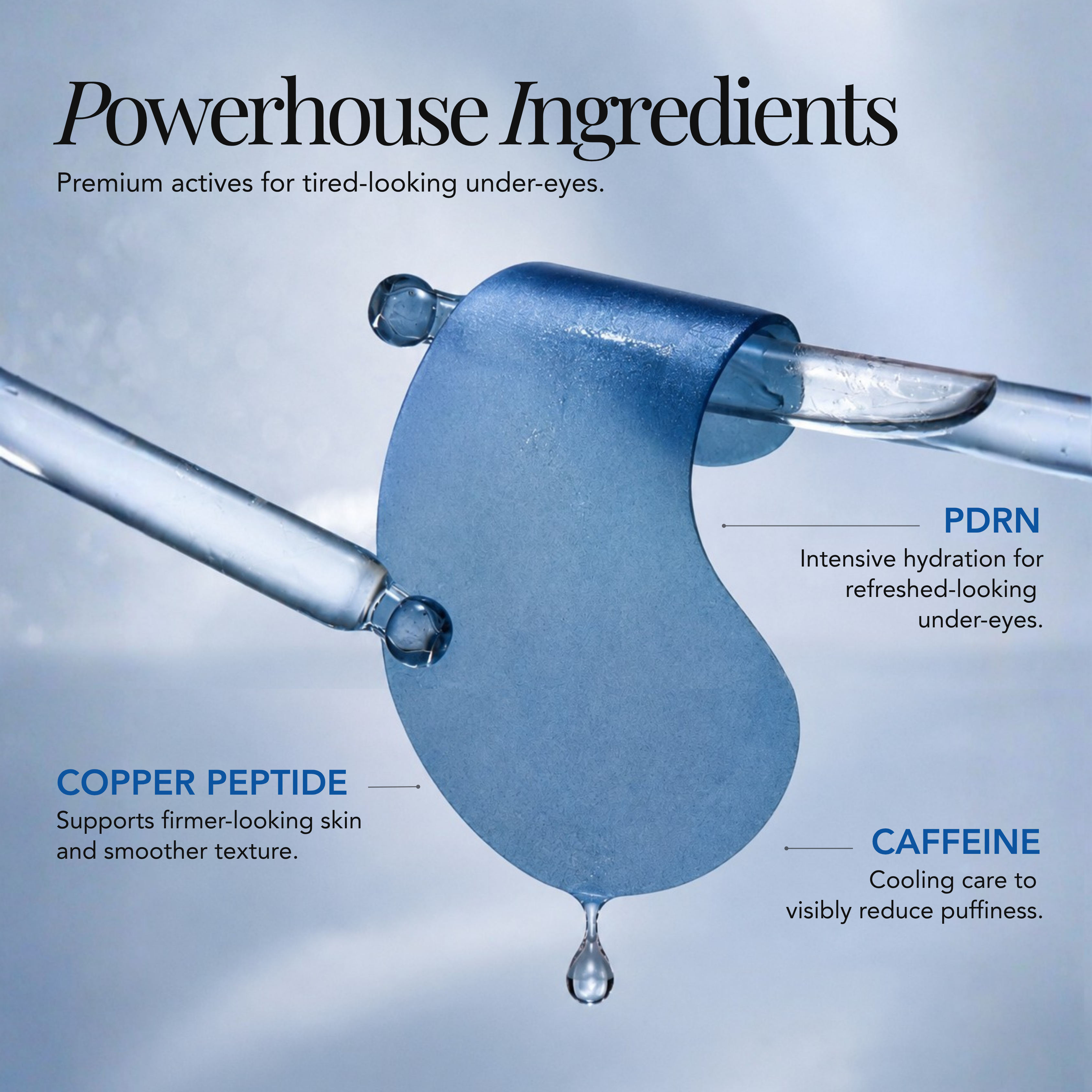
Eye masks with active ingredients such as copper peptides and PDRN can be a great addition to a night skincare routine since they help to enhance the appearance of smoother, more hydrated and firmer under-eyes. Eye patches will not make wrinkles, puffiness or dark circles disappear, but they may provide a refreshed look in the morning.
They are especially useful after travel, long screen days, poor sleep, post-work tiredness, or one of those nights when your face just needs a reset.
How to Adjust for Your Skin Type
For oily skin, keep the routine light. Use a gel cleanser, hypochlorous acid spray, a lightweight serum, and a non-comedogenic moisturizer. If you use a retinoid, introduce it slowly.
For dry skin, focus on barrier support. Use a gentle cleanser, hydrating serum, richer moisturizer, and avoid using strong actives too often.
For sensitive skin, fewer products are better. Cleanse gently, use calming hydration, and avoid stacking exfoliating acids with retinoids.
For acne-prone skin, consistency matters. Cleanse well, use non-comedogenic products, and avoid heavy formulas that may clog pores. Hypochlorous acid spray can be helpful when skin feels sweaty, reactive, or breakout-prone.
Common Night Routine Mistakes
An error that people make is skipping the cleansing part because no makeup was worn. There may still be sunscreen, sweat, oil, and pollutants throughout the day, so the nighttime cleansing step should be a part of the routine.
Yet another common error is using too many active ingredients. Retinoids, exfoliating acids, acne solutions, and strong serums should not all be used on top of each other.
The next mistake is the incorrect placement of eye patches. They should be placed comfortably below the eyes, but never right in the eye area. Moreover, the time for wearing them should not exceed the recommendations from the product description.
Your night skincare routine should help you achieve the results of calming your skin, cleansing it and providing it with support. If the skin is tight, burning, and irritated every night, try simplifying your routine.
FAQ
What is the correct night skin routine order?
A simple night skin routine order is makeup or sunscreen remover, cleanser, hypochlorous acid spray, serum, treatment products, moisturizer, and eye patches if needed.
Should I use hypochlorous acid spray at night?
Yes, you can use hypochlorous acid spray at night after cleansing. It can be helpful when your skin feels irritated, sweaty, reactive, or breakout-prone.
Can I use a copper peptide serum at night?
Yes. A lightweight copper peptide serum can work well at night because it supports hydration, barrier comfort, and smoother-looking skin while you sleep.
Should I use retinol every night?
Not at first. Start two to three nights per week, then increase slowly if your skin tolerates it. If your skin becomes dry, tight, or irritated, use it less often.
Where do eye patches fit in a night routine?
Eye patches can be used after cleansing and serum, or after moisturizer if the formula layers well. Use them on the under-eye area, leave them on for the recommended time, then tap in leftover serum.
Can I use eye patches every night?
You can use eye patches as needed, depending on the product directions and how your skin responds. They are especially helpful when your under-eyes look dry, tired, puffy, or dull.
Disclaimer
This blog is for educational purposes only and is not medical advice. A night skin routine can support the look and feel of your skin, but it does not treat medical skin conditions. If you have persistent acne, irritation, rash, swelling, infection, or sudden skin changes, speak with a dermatologist or healthcare professional.
References
- American Academy of Dermatology Association. (2021). Retinoid or retinol? https://www.aad.org/public/everyday-care/skin-care-secrets/anti-aging/retinoid-retinol
- American Academy of Dermatology Association. (2024). Should I apply my skin care products in a certain order? https://www.aad.org/public/everyday-care/skin-care-basics/care/apply-skin-care-certain-order
- Del Rosso, J. Q., & Bhatia, N. (2018). Status report on topical hypochlorous acid: Clinical relevance of specific formulations, potential modes of action, and study outcomes. Journal of Clinical and Aesthetic Dermatology, 11(11), 36–39. https://pmc.ncbi.nlm.nih.gov/articles/PMC6303114/
If you’re looking for products to support your night skin routine, you can learn more about our hypochlorous acid spray, Barrier Bounce Copper Peptide Serum, and Off-Duty Copper Peptide + PDRN Eye Patches here. Our products are also available on Amazon.

Written by
Honeydew Labs Team


