

The best skincare products for blackheads are products that help clear clogged pores without stripping your skin. Look for a gentle cleanser, salicylic acid, a retinoid, lightweight moisturizer, sunscreen, and a hypochlorous acid spray if your skin also feels sweaty, irritated, or breakout-prone. Blackheads can be stubborn, so the goal is to use consistent pore-clearing products while keeping your skin barrier calm and hydrated.

What are blackheads?
Blackheads are clogged pores that remain open on the skin surface. These are formed by accumulation of oil, dead skin cells and debris within the pore. The dark spots have nothing to do with dirt. This is because they appear due to oxidation of the trapped matter when it comes into contact with the air.
Blackheads appear on areas like nose, chin, forehead, cheeks, chest and back. People with oily skin are likely to develop blackheads; however, individuals with dry or combination skin also experience blackheads. According to Cleveland Clinic, blackheads are a milder form of acne. They develop when the hair follicles get clogged with oil and dead skin cells.
Since blackheads appear within the pore, regular cleansing cannot treat them. Harsh scrubs only irritate the skin and increase the chances of reddening and breakouts. The most effective treatment for blackheads includes chemical exfoliation and light skincare products.
1. Gentle Cleanser
The ideal blackhead removal regimen will include a gentle cleanser. The use of a cleanser aids in the removal of sunscreen, makeup, sweat, excessive sebum production, and daily impurities before they clog the pores.
In the case where you have oily skin, the best cleanser would be a gentle foaming cleanser. If you have dry or sensitive skin, a gel or cream cleanser is preferred. It is important to avoid any cleansers that will make you feel tight, squeaky, and uncomfortable after using them.
It is advisable to cleanse only once in the morning when waking up oily, but twice when sleeping at night. For people who wear heavy sunscreen and makeup, it is recommended that one should consider double cleansing.
2. Salicylic Acid
Salicylic acid is one of the most useful ingredients for blackheads. It is a beta hydroxy acid, or BHA, that can move through oil and help exfoliate inside the pore. This makes it especially helpful for clogged pores, blackheads, and oily areas like the nose and chin.
The American Academy of Dermatology notes that salicylic acid has been used for years to treat acne because it helps open clogged pores and exfoliate the skin. For blackheads, this is exactly what you want: a product that works deeper than a physical scrub.
You can use salicylic acid as a cleanser, toner, serum, or treatment pad. If you are new to it, start two to three times per week. Using it too often can make your skin dry or irritated, especially if you are also using a retinoid.
3. Retinoid
Another good choice of product for blackheads is a retinoid since it prevents your pores from getting blocked. The retinoid works to increase the turnover rate of your skin cells, making it harder for dead cells to accumulate in your pores.
If you suffer from blackheads, whiteheads, rough skin, and blocked pores, a retinoid might help you a lot. Adapalene is one of the most popular OTC retinoids that can be used to treat acne, but other retinoids can be prescribed by your dermatologist.
Start with a low dosage. You need to use only a small quantity for your whole face, not just your nose area. It should be applied in the evening and avoided near your eyes, nose corners, and mouth corners. Retinoids can be irritating and lead to dry skin, so use them with a moisturizer and sunscreen.
4. Lightweight Moisturizer
Moisturizing is important regardless of whether you have oily or blackhead-prone skin. Dehydration can make the skin tight and irritated, more susceptible to irritation from actives. A compromised skin barrier will make it difficult to use salicylic acid or retinoid consistently.
Choose a light moisturizer that does not clog pores, is non-comedogenic or oil-free. Lightweight gels and lotions are good candidates. Humectants such as glycerin, hyaluronic acid, panthenol, and ceramides may be helpful to hydrate the skin without being heavy.
Do not use thick creams, facial oils, or balm if they tend to congest the pores. Not all "natural" oils are suitable for blackheads-prone skin.
5. Non-Comedogenic Sunscreen
Use of a sunscreen is essential in a regimen to treat blackheads, particularly when salicylic acid or retinoids are included in your treatment. Both of these products have the potential to increase sensitivity to the rays of the sun, thus causing irritation and making the application routine harder.
Find a sunscreen product that is light, oil-free, and comfortable to apply daily. If your sunscreen is heavy, oily, and unpleasant to apply, you might skip it due to discomfort. Sunscreen products in gel, fluid, and mineral variants can be considered.
If you find that sunscreen only aggravates the problem of blackheads, try changing the formula rather than foregoing it altogether.
6. Hypochlorous Acid Spray
A hypochlorous acid spray will not dissolve blackheads the way salicylic acid can, and it will not prevent clogged pores the way a retinoid can. However, it can still be a helpful support product if your blackhead-prone skin also gets sweaty, irritated, or breakout-prone.
Hypochlorous acid, also called HOCl, is known for antimicrobial and anti-inflammatory properties. A review in the Journal of Clinical and Aesthetic Dermatology discusses topical hypochlorous acid and its use in skin-related contexts involving wounds, itching, ulcers, and inflammatory skin concerns.
For blackhead-prone skin, think of hypochlorous acid spray as a calming refresh step. It can be useful after workouts, after wearing a mask, after being outside in heat, or anytime your skin feels sweaty and uncomfortable but you cannot fully cleanse yet.
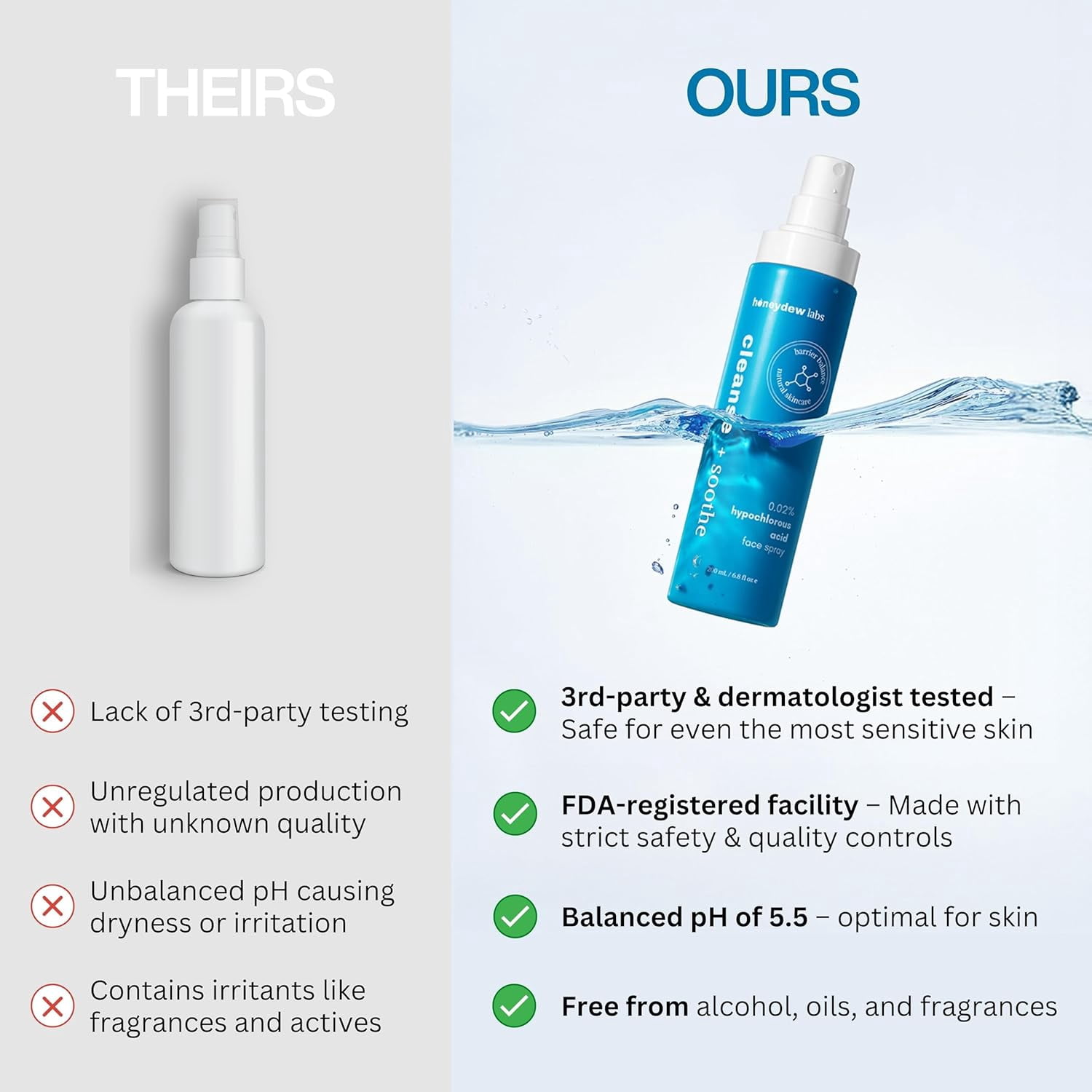
If you’re looking for a hypochlorous acid spray, you can learn more about Honeydew Labs' formulation here. It’s available through select retailers, including Amazon.
7. Clay Mask
Using a clay mask will help absorb any excess oil and tighten pores to improve the appearance of the skin temporarily. The nose, forehead, and chin will be some of the areas that benefit from this procedure. Clay masks, however, should not be used too frequently.
A single application every week may work well for most individuals. When you experience any tightness, itching, or flakiness after the treatment, then you should try using it less frequently or change the mask formula.
What to Avoid for Blackheads
Do not use pore strips for blackhead removal because, while they will get rid of some surface deposits, they will not prevent new blackheads from appearing. Moreover, they can cause irritation if you use them frequently.
Do not over-exfoliate with scrubs, picking, squeezing, and using multiple treatments for your acne at once. The latter method can be particularly problematic because it leads to inflammation, redness, broken capillaries, or even scarring. When blackheads are really persistent, it is better to opt for professional blackhead extraction rather than squeezing.
A Simple Blackhead Routine
In the morning, cleanse, spray with hypochlorous acid if preferred, apply moisturizer and sunscreen. For the nighttime routine, cleanse thoroughly, apply salicylic acid a few days a week or retinoid every other night followed by moisturizer.
Do not begin all active ingredients simultaneously. Use only one product, and apply it regularly for several weeks until your skin adjusts. Blackheads require patience since not only are you unclogging the pores but preventing new ones from occurring.
FAQ
What product is best for blackheads?
Salicylic acid is one of the best over-the-counter ingredients for blackheads because it helps exfoliate inside oily pores. Retinoids are also helpful because they reduce clogged pores over time.
Can hypochlorous acid spray remove blackheads?
No. Hypochlorous acid spray does not dissolve blackheads. It can support blackhead-prone skin by helping calm skin that feels sweaty, irritated, or breakout-prone.
Are pore strips good for blackheads?
Pore strips may remove some surface buildup temporarily, but they do not prevent blackheads from coming back. They can also irritate the skin if overused.
How often should I use salicylic acid for blackheads?
Start two to three times per week. If your skin tolerates it well, you can slowly increase use. If your skin becomes dry, tight, or irritated, use it less often.
Should I moisturize if I have blackheads?
Yes. Blackhead-prone skin still needs moisture. A lightweight, non-comedogenic moisturizer helps keep your skin barrier healthy while using active ingredients.
Disclaimer
This blog is for educational purposes only and is not medical advice. Blackheads are a common type of acne, but persistent acne, painful breakouts, scarring, or sudden skin changes should be discussed with a dermatologist or healthcare professional.
References
- American Academy of Dermatology Association. (2024). Acne: Diagnosis and treatment. https://www.aad.org/public/diseases/acne/derm-treat/treat
- Cleveland Clinic. (2021). Blackheads: What they look like, treatment & prevention. https://my.clevelandclinic.org/health/diseases/22038-blackheads
- Del Rosso, J. Q., & Bhatia, N. (2018). Status report on topical hypochlorous acid: Clinical relevance of specific formulations, potential modes of action, and study outcomes. Journal of Clinical and Aesthetic Dermatology, 11(11), 36–39. https://pmc.ncbi.nlm.nih.gov/articles/PMC6303114/

Written by
Honeydew Labs Team


